Does Lungora work? What the evidence actually shows
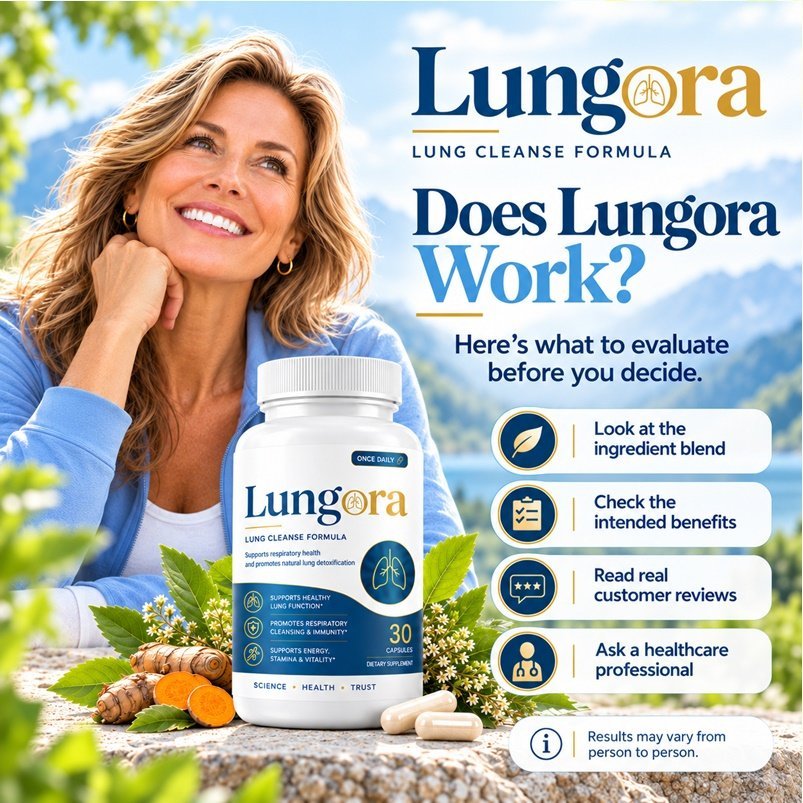
No trial has tested Lungora itself, so we looked at the research behind each ingredient, the doses involved, and what that means for you.
This page contains affiliate links. If you buy through them we may earn a commission at no extra cost to you. It does not change our conclusions. How we earn money.
There is no published clinical evidence that Lungora improves lung function or breathing. Its ingredients have been studied for other things, mainly nerve health, blood vessels and antioxidant activity, and a couple have small, mixed studies in people with lung disease. Because five of the six are in an undisclosed blend, we can't tell whether the capsule contains doses close to those studied.
How to read supplement evidence
A claim like "clinically studied ingredients" can mean very little. For a supplement to earn a strong rating from us, it needs three things to line up:
- Human trials, ideally randomized and placebo-controlled, not just cell or animal studies
- An outcome you care about, such as breathlessness, exercise capacity or lung function tests, not only a blood marker
- A dose in the product that matches the dose that was tested
Our evidence meter reflects the first two for each ingredient. The third we cover separately, because it's where Lungora is weakest.
Moderate human evidence Limited human evidence Little or no evidence
Ingredient by ingredient
Magnesium glycinate
Limited human evidence
Magnesium helps muscles relax, including the smooth muscle around the airways. Hospitals give intravenous magnesium sulfate for some severe asthma attacks, which is where the "breathing" link comes from. That's a different form, route and situation. Studies of oral magnesium for everyday asthma control have produced inconsistent results. Lungora's 80 mg is modest, roughly 19 to 25% of the adult daily requirement, and mainly useful if your diet is low in magnesium.
L-carnitine
Limited human evidence
L-carnitine helps cells turn fat into energy. A small number of trials in people with COPD have suggested it may improve exercise tolerance when combined with pulmonary rehabilitation. The studies were small, used gram-level doses, and involved supervised training, so they don't tell us much about a low dose taken alone.
Coenzyme Q10
Limited human evidence
CoQ10 is involved in cellular energy production and acts as an antioxidant. Some research has found lower CoQ10 levels in people with COPD, and small trials of supplementation have reported mixed results on exercise capacity. Typical study doses run from 100 to 300 mg a day.
Turmeric extract
Little or no evidence
Curcumin, turmeric's main active compound, has anti-inflammatory effects in lab and animal studies, including models of airway inflammation. Human evidence for breathing outcomes is thin, and curcumin is poorly absorbed unless it's formulated for absorption, which the Lungora label doesn't mention.
Alpha lipoic acid
Little or no evidence
Alpha lipoic acid is an antioxidant best studied for diabetic nerve pain, usually at 600 mg a day. We found no meaningful human research on breathing or lung function.
Butcher's broom root extract
Little or no evidence
Butcher's broom has been studied, often combined with other compounds, for chronic venous insufficiency, meaning heavy or swollen legs from poor vein function. It has no established role in lung health.
The dose problem
This is the part most reviews skip. The Supplement Facts panel lists magnesium separately and puts the other five ingredients in a single 575 mg proprietary blend. Here's what research has typically used per day:
| Ingredient | Typical dose in studies | Can Lungora match it? |
|---|---|---|
| Alpha lipoic acid | About 600 mg | Not while leaving room for four other ingredients |
| L-carnitine | 1,000 to 2,000 mg | No; that exceeds the entire blend |
| Coenzyme Q10 | 100 to 300 mg | Possibly, but unknown |
| Turmeric / curcumin | 500 mg or more | Unknown |
| Butcher's broom | Varies by extract | Unknown |
The arithmetic is simple: the doses tested in research add up to well over two grams, and the blend is 575 mg. Some ingredients must be present in small amounts. A proprietary blend is legal, but it means you can't check.
What would change our mind
We'd upgrade our assessment if the brand published individual ingredient amounts, or better, a randomized controlled trial of Lungora itself with breathing-related outcomes. If either appears, we'll update this page and note the change in the date above.
Seek medical care promptly for breathlessness that is new or getting worse, breathlessness at rest, chest pain, coughing up blood, swelling in the legs, or a cough lasting more than three weeks. For people with diagnosed lung disease, the approaches with the strongest evidence are prescribed inhalers, pulmonary rehabilitation, stopping smoking, and vaccinations against flu, COVID-19 and pneumonia.
Our bottom line on effectiveness
Lungora may help a little if you happen to be low in magnesium, and its antioxidant ingredients are unlikely to hurt most people. Beyond that, any effect on breathing is unproven. If you want to find out for yourself, a structured trial with a simple before-and-after measure, described in our results timeline, and a firm refund deadline is the sensible approach.
Sources and further reading
- NIH Office of Dietary Supplements: Magnesium
- NIH Office of Dietary Supplements: Carnitine
- NCCIH: Turmeric
- NCCIH: Coenzyme Q10
- Linus Pauling Institute: Lipoic acid
- American Lung Association
Order from the official source
Buying through the official order page is the only way to get genuine bottles and the full 60-day money-back guarantee.
Go to the official Lungora page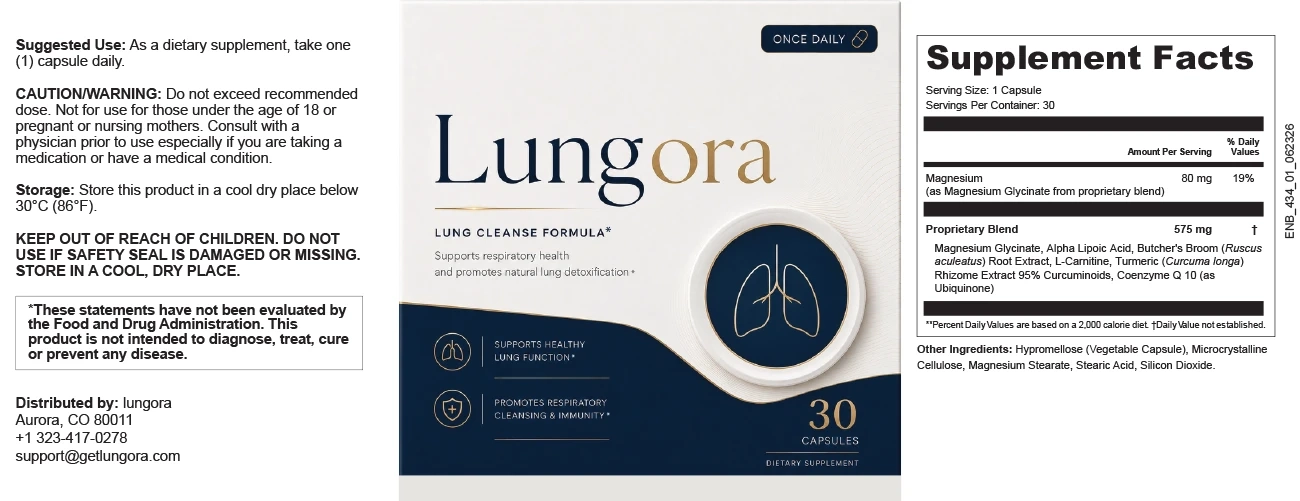
These statements have not been evaluated by the Food and Drug Administration. Lungora is a dietary supplement and is not intended to diagnose, treat, cure or prevent any disease. This site provides general information, not medical advice. If you have a lung condition, take medication, are pregnant or nursing, or have new or worsening breathing symptoms, speak with a qualified clinician.