Lungora ingredients: all six, explained
What each ingredient is, why it's in the formula, how much research supports it, and what the label does and doesn't tell you.

This page contains affiliate links. If you buy through them we may earn a commission at no extra cost to you. It does not change our conclusions. How we earn money.
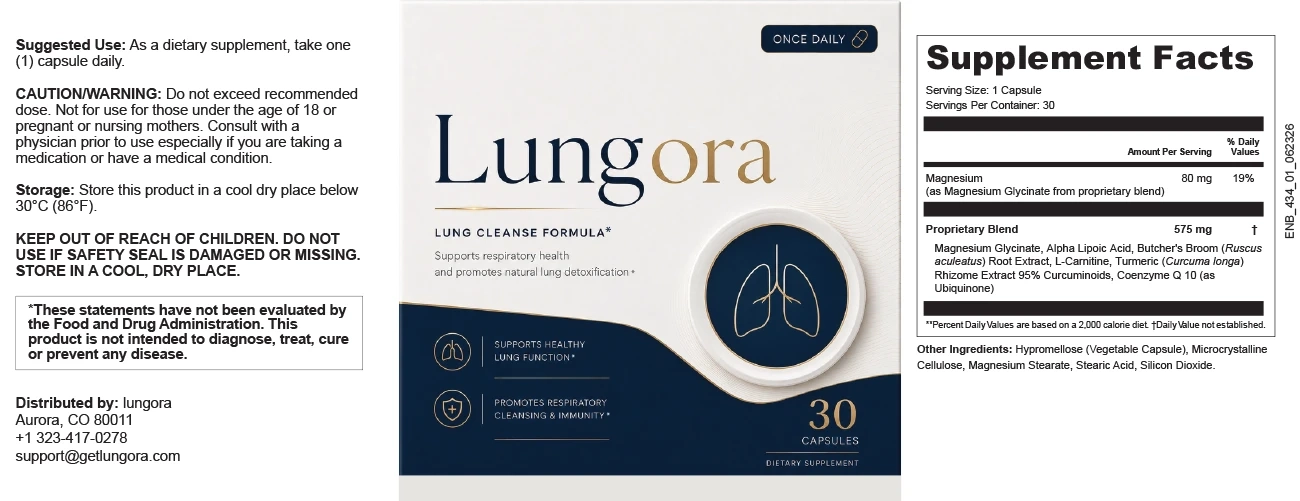
Each capsule contains magnesium (as magnesium glycinate, 80 mg) and a 575 mg proprietary blend of alpha lipoic acid, butcher's broom root extract, L-carnitine, turmeric extract and coenzyme Q10. Individual amounts for the five blend ingredients are not disclosed.
The Supplement Facts panel, decoded
| Component | Amount per capsule | Notes |
|---|---|---|
| Magnesium (as magnesium glycinate) | 80 mg | About 19% of the daily requirement for men over 30, 26% for women |
| Proprietary blend | 575 mg total | Alpha lipoic acid, butcher's broom root extract, L-carnitine, turmeric extract, coenzyme Q10 |
| Other ingredients | Not quantified | Hypromellose (capsule), microcrystalline cellulose, magnesium stearate, stearic acid, silicon dioxide |
Ingredients in a proprietary blend are listed in descending order by weight, so the first one listed is present in the largest amount. Check the order on your bottle to get a rough sense of the balance. You'll see the full label image at the bottom of this page.
Some sites selling Lungora claim it has "no proprietary blend." The label image we reviewed says otherwise. Trust the label on the bottle over the sales page.
Each ingredient in detail
Evidence ratings use our three-level meter, explained on the evidence page.
Magnesium glycinate
Magnesium is an essential mineral involved in hundreds of enzyme reactions, including muscle and nerve function. The glycinate form is bound to the amino acid glycine and tends to be gentler on the stomach than cheaper forms such as magnesium oxide.
- Brand's stated role
- Nerve health and muscle relaxation
- Evidence
- Limited human evidence
Intravenous magnesium is used in hospitals for some severe asthma attacks; results for oral magnesium in routine asthma are inconsistent. - Studied dose
- Adult requirement 310 to 420 mg a day from all sources
- Watch out for
- Kidney disease; can reduce absorption of some antibiotics and osteoporosis drugs if taken at the same time
Alpha lipoic acid (ALA)
A compound your body makes in small amounts, used in energy metabolism. As a supplement it works as an antioxidant in both water- and fat-based parts of cells.
- Brand's stated role
- Antioxidant and nerve support
- Evidence
- Little or no evidence
Best studied for diabetic neuropathy; no meaningful research on breathing. - Studied dose
- Around 600 mg a day in most nerve studies
- Watch out for
- Can lower blood sugar, so matters if you take diabetes medication; may cause nausea
Butcher's broom root extract
A small evergreen shrub whose root contains ruscogenins, compounds that appear to tighten veins. It's a traditional remedy for varicose veins and hemorrhoids.
- Brand's stated role
- Circulation
- Evidence
- Little or no evidence
Studied mainly for chronic venous insufficiency, often combined with other ingredients. No established lung benefit. - Studied dose
- Varies widely by extract
- Watch out for
- Occasional stomach upset; theoretically may work against alpha-blocker medications or raise blood pressure
L-carnitine
An amino acid derivative that carries fatty acids into mitochondria to be burned for energy. Most people make enough, and red meat is the main dietary source.
- Brand's stated role
- Cellular energy and circulation
- Evidence
- Limited human evidence
A few small trials in COPD suggest better exercise tolerance when combined with rehabilitation. - Studied dose
- 1 to 2 grams a day in most trials
- Watch out for
- Stomach upset and a fishy body odor at higher doses; may affect warfarin and thyroid medication
Turmeric extract
Turmeric root contains curcuminoids, mainly curcumin. One seller claims Lungora's extract is standardized to 95% curcuminoids; the label we saw does not state this.
- Brand's stated role
- Antioxidant and inflammation support
- Evidence
- Little or no evidence
Strong anti-inflammatory signals in lab studies; human data on breathing is thin, and plain curcumin is poorly absorbed. - Studied dose
- 500 mg or more of curcumin in many trials
- Watch out for
- Bleeding risk with blood thinners; rare liver injury reports; avoid with gallstones
Coenzyme Q10
A compound found in every cell and concentrated in the heart. Levels decline with age and with statin use.
- Brand's stated role
- Cellular energy and antioxidant support
- Evidence
- Limited human evidence
Small, mixed trials in COPD on exercise capacity. - Studied dose
- 100 to 300 mg a day
- Watch out for
- May reduce the effect of warfarin; may lower blood pressure slightly; mild insomnia or stomach upset
Does the combination make sense?
The brand describes the formula as three pairs working on nerves, circulation and antioxidant protection. Grouping ingredients this way is a marketing choice, not a tested mechanism. There's no study showing these six together work better than any one of them alone. The combination is plausible as a general wellness blend, and it's clearly built around ingredients that are cheap to source and have familiar names.
What's not in it
Several ingredients commonly found in lung-focused supplements are absent: N-acetylcysteine (NAC), which thins mucus and has the most research in COPD of any supplement; vitamin D, which matters for people who are deficient; and quercetin or mullein, which are popular though less studied. That isn't necessarily a flaw, but it's worth knowing if you're comparing products. See our alternatives page.
Quality claims
Sellers say Lungora is made in the USA in an FDA-registered, GMP-certified facility, and that it's non-GMO. We couldn't find the name of the manufacturer or any third-party testing certificate, such as NSF or USP verification. "FDA-registered" only means the facility is on file with the FDA. It isn't an approval of the product.
Frequently asked questions
Is Lungora vegan?
The capsule shell is hypromellose, a plant-based material. Some sellers describe Lungora as vegan, but the label we reviewed doesn't carry a certification. Check your bottle or ask the seller.
Does Lungora contain stimulants or caffeine?
No stimulants are listed on the label.
Is Lungora gluten-free?
Some sellers say so. The label doesn't state it, so contact support if you have celiac disease.
Can I take Lungora with a multivitamin?
Usually yes, but add up your magnesium from all sources. Speak with your pharmacist if you take several supplements.
Choose a Lungora package
Prices below are what the official checkout listed when we last checked. Always confirm the final total on the order page before paying.
One-time payment as listed. Every package carries a 60-day money-back guarantee counted from your purchase date. Prices checked September 30, 2026; the seller can change them at any time.
These statements have not been evaluated by the Food and Drug Administration. Lungora is a dietary supplement and is not intended to diagnose, treat, cure or prevent any disease. This site provides general information, not medical advice. If you have a lung condition, take medication, are pregnant or nursing, or have new or worsening breathing symptoms, speak with a qualified clinician.